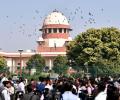
highlights of the Supreme Court judgment in which it unanimously granted the entire 2.77 acre of the disputed Ram Janambhoomi-Babri masjid land in Ayodhya to deity Ram Lalla.
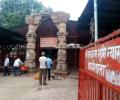
Jamiat chief Maulana Arshad Madani said they took the decision following extensive deliberations involving lawyers and experts.

After Azam Khan's demand of handing over the Taj Mahal to the Waqf Board, Uttar Pradesh Bharatiya Janata Party chief Laxmi Kant Bajpai has sought to drag the famed mausoleum into another row by claiming that it was a part of an ancient temple.
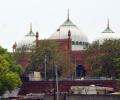
The objections against the suit were raised by the management committee of the mosque and the Uttar Pradesh Sunni Central Waqf Board.
The litigant, in review plea filed through lawyer Ejaz Maqbool, has also sought an interim stay on operation of the verdict in which it had directed the Centre that a trust be formed within three months for construction of the temple at the site.
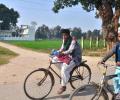
"The Trust chose January 26, 2021 for laying the foundation stone of the Ayodhya mosque as on this day our Constitution came into effect over seven decades ago. Our Constitution is based on pluralism, which is the leitmotif of our mosque project," said Athar Hussain, secretary of the Indo-Islamic Cultural Foundation (IICF).
While closing the contempt proceedings, the bench observed that the matter ought to have come up for hearing earlier.
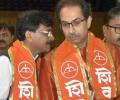
Chief Minister Thackeray will definitely go for the 'bhoomi pujan' ceremony, because the Shiv Sena shares sentimental, religious and national ties with this issue," Raut said.
The bench on October 16 had reserved the judgment after marathon hearing of 40 days.

There are indications that the Modi dispensation was disinclined to bring the VHP into the temple-mosque frame.
The litigants and their counsels -- altogether over 50 people -- met the three-member mediation panel on the Avadh University premises in Faizabad.
Both Hindus and Muslim parties have filed review pleas against the verdict that paved way for a Ram temple at the disputed while giving 5-acre land for a mosque elsewhere.
The Supreme Court of India will hear a plea from the mosque management committee challenging an order rejecting its petition in the Krishna Janmabhoomi-Shahi Idgah dispute in Mathura, Uttar Pradesh on January 15. The Allahabad High Court had rejected the mosque committee's plea, stating that the religious character of the Shahi Idgah mosque needed to be determined. The case involves claims that the mosque was built after the demolition of a temple, a claim disputed by the mosque committee. The Supreme Court will now decide on the maintainability of the mosque committee's plea.
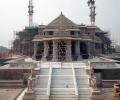
The construction of the three-storeyed Ram temple in Ayodhya will be completed by December this year, temple construction committee chairperson Nripendra Misra said on Thursday. The sprawling temple complex will also have other structures.
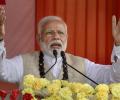
Mahant Kamal Nayan Das, the spokesperson of Trust's president Nritya Gopal Das said, "We have suggested two auspicious dates -- August 3 and 5 -- for the prime minister's visit based on calculations of movements of stars and planets."

From the kind of food to the art which will be displayed at the museum, historian Pushpesh Pant shares his vision.
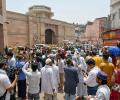
The Supreme Court on Friday agreed to hear an appeal of the Gyanvapi management committee against an Allahabad High Court order which held that lawsuits for "restoration" of a temple where the mosque stands in Varanasi are maintainable.
The petitioner submitted an application in the court of the Civil Judge on Monday seeking permission for 'purification' of the sanctum sanctorum of the Keshav Dev temple, which he claimed was inside the mosque, his counsel said.
Iqbal Ansari, one of the main plaintiffs who fought for the right of the community over the disputed land, says Muslims in Ayodhya won't be satisfied if the Sunni Waqf Board accepts the five acres in Dhannipur.
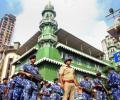
Religious scholar Hazrat Moin Miyan said though the option of filing a review petition is open, they are accepting the verdict for the betterment of the society.

The arguments in the matter were the second longest after the landmark Keshvanand Bharti case in 1973 during which the proceedings for propounding the doctrine of basic structure of the Constitution continued for 68 days.
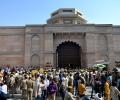
Mishra said that the court has fixed July 7 for the next hearing.
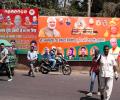
The bench then said that it was not going to fast track the matter.

Justice Padia stayed the Varanasi civil court order, ruling that the subordinate court passed its order ignoring the fact that the high court had reserved its verdict on the plea challenging the maintainability of the suit which had been filed earlier in the lower court for the survey.

A three-judge bench of the Allahabad high court, which is hearing a title suit on Ayodhya land, had directed the UP government to replace Mani following complaints by the Sunni Central Waqf Board of violation of excavation norms.
The court asked the UP govt to get examined the disputed premises by a five-member team of the ASI at its expense.
A five-judge Constitution bench headed by Chief Justice of India Ranjan Gogoi, which started the day-to-day proceedings on August 6 after mediation proceedings failed to find an amicable solution to the vexatious dispute, has revised the deadline for wrapping up the proceedings and has fixed it on October 17.
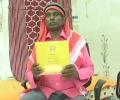
'All this (temple's construction) will change the fate of Ayodhya. We all want our child to get better opportunities'
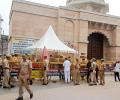
The Allahabad high court reserved its judgment on Friday in a petition challenging the maintainability of a suit seeking 'restoration' of a temple at the site of the Gyanvapi mosque in Varanasi.

The apex court said the faith of Hindus that Lord Ram was born at the site was undisputed, and he is symbolically the owner of the land.

The Hindu litigants claim the mosque holds signs suggesting that it was a temple once.

The Allahabad high court on Thursday reserved till August 3 its order on a plea against the survey of Gyanvapi mosque premises by the Archeological Survey of India.

The petitions filed by the Anjuman Intezamia Masjid Committee (AIMC) and the Uttar Pradesh Sunni Central Waqf Board had also challenged a Varanasi court order of April 8, 2021 to conduct a comprehensive survey of the Gyanvapi mosque.
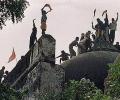
The bench took serious note of the submission of senior advocate Kapil Sibal, appearing for one of the parties, that the appeals be heard in July 2019 after completion of the next Lok Sabha polls as the atmosphere at present was not conducive.

Four BJP leaders and former Supreme Court judge S Abdul Nazeer, who was part of the Constitution bench that upheld the archaeological report on Ayodhya, were among six new faces appointed as Governors on Sunday.

'Attending roza-iftar with a skull cap is not secularism. People also know that this is drama'

The Ayodhya district administration has told news channels that litigants in the Ayodhya land dispute case should not be part of any discussions that they broadcast from the temple town during the 'Bhumi Pujan' for the Ram temple on August 5. In an advisory, it also said that if channels are broadcasting a debate or programme from Ayodhya in Uttar Pradesh during the ground-breaking ceremony, there should be no comments against any person or religion.

The apex court had on July 11 sought a report on the mediation process and said that a day-to-day hearing might commence from July 25 if the court decides to conclude the mediation proceedings.
The apex court rejected an appeal challenging a July 10 decision of the Allahabad high court which had also dismissed the plea finding no error or illegality in the order of a Mathura civil judge who had decided to first hear the issue of maintainability of the suit as raised by management committee of the mosque.
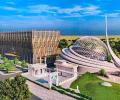
But three years after the apex court settled the Ram Janmabhoomi-Babri Masjid land dispute, there are no signs of any building activity on the proposed mosque site.
 © 2026 Rediff.com - Advertise with us - Disclaimer - Privacy Policy - Sitemap - Feedback - About us - Terms of use - Grievances